
 Michael Cambridge
While history, modern lore, and pop culture are littered with kitchen disasters, there is a uniquely fascinating chaos that unfolds when infamous historical figures, despotic rulers, notoriously clumsy apprentices, and legendary culinary icons turn their hands to the oven. When larger-than-life personalities attempt the delicate, unforgiving science of baking, things rarely go according to plan, collapsing into catastrophic political embarrassments, fatal stomach afflictions, or hilarious, high-stakes kitchen panics. Yet, in true ironic fashion, some of these disastrous kitchen fails didn’t just end in ruin; they accidentally birthed some of the world’s most famous, beloved pastries that we still devour today.
1. King Alfred the Great: The Burnt Cakes
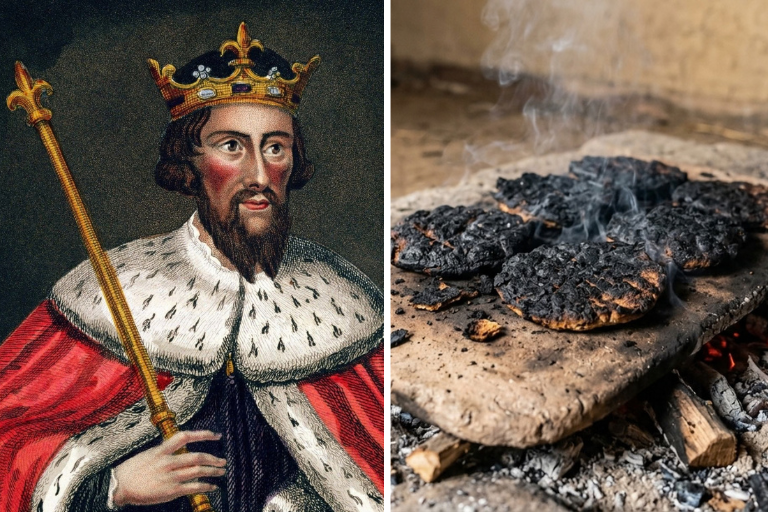
While hiding incognito from invading Vikings in the Somerset marshes, Alfred who was King of the Anglo-Saxons (849–899 AD), took shelter in a peasant woman’s cottage. Unaware of his royal identity, the woman left him in charge of watching her wheat cakes baking on the hearth. Preoccupied with plans to reclaim his kingdom, Alfred completely forgot about the food. The cakes burned to a crisp, and the enraged cottager famously berated the king of England for being quick to eat her bread but too lazy to turn it.
2. King Adolf Frederick of Sweden: The Deadly Semla Buns
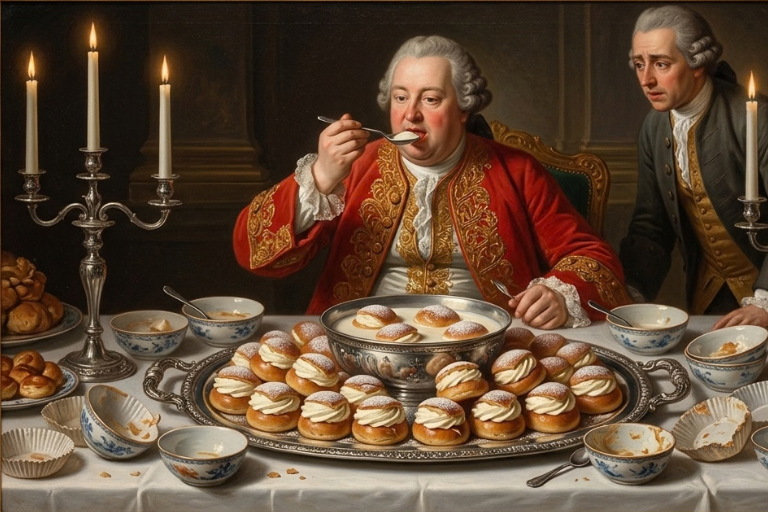
Known to history as “the king who ate himself to death,” Adolf Frederick who was the King of Sweden (1710–1771) sat down on Shrove Tuesday for a lavish feast. To wrap up the meal, he requested semla, traditional Swedish cardamom spiced buns filled with almond paste and cream, served in warm milk. Rather than stopping at one, he devoured 14 stuffed buns in a single sitting. The resulting severe digestive failure and stroke killed him that very night.
3. Mary Mallon (“Typhoid Mary”): The Lethal Peach Ice Cream & Cakes
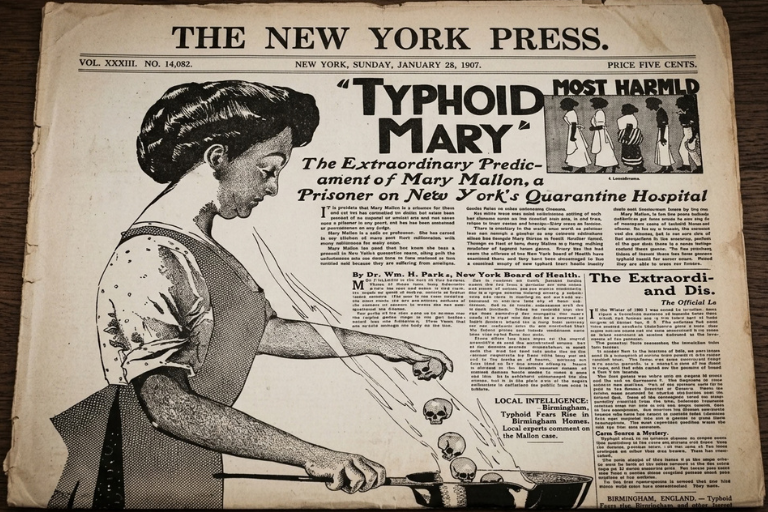
As a cook for wealthy Manhattan families, Mary’s baked goods and raw dessert specialties were in high demand. However, because typhoid bacteria die when exposed to high temperatures, her baked treats weren’t always enough to protect her victims. Her signature, unbaked ice cream accompanied by warm baked fruits regularly spread fatal Salmonella typhi infections to the households she served.
4. Queen Marie Antoinette: The Fictional Brioche Outrage
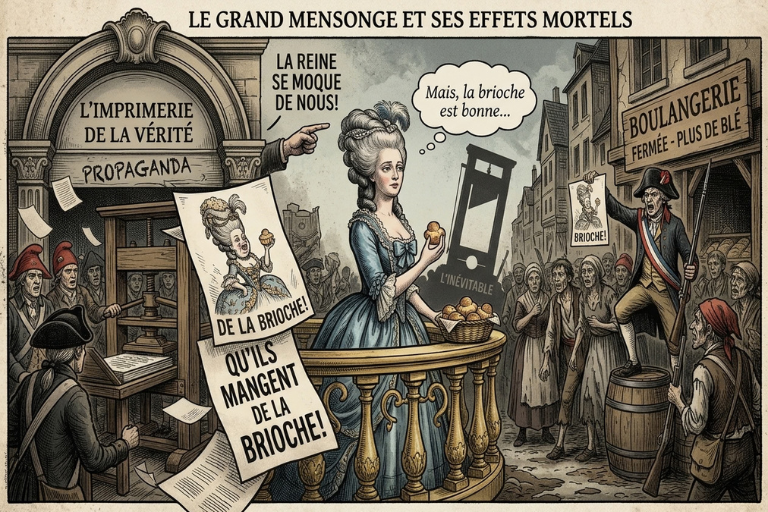
While Marie Antoinette also known as The controversial Last Queen of France (1755–1793) loved French pastries, the infamous bakery line attributed to her “Let them eat cake” (originally “Qu’ils mangent de la brioche”) was a total PR disaster that didn’t go as expected. Propaganda spread by revolutionaries claimed she mockingly suggested starving peasants eat rich, butter-heavy brioche bread when wheat ran out. Though historians agree she likely never said it, the false narrative cemented her reputation for cold arrogance and helped push her to the guillotine.
5. Charles II of Spain: The Unrising Imperial Bread
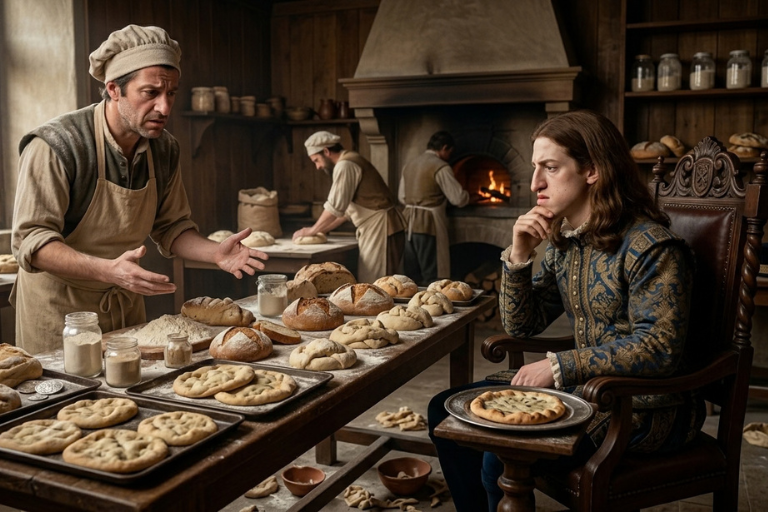
This is the story of King Charles II who is also known as The famously frail and last Habsburg ruler of Spain (1661–1700). Plagued by severe genetic ailments, King Charles II’s royal court frequently tried to nurture his health through delicate, highly specialized diets, including royal sourdoughs and pastries. However, Charles’s severe jaw deformity (the Habsburg jaw) made chewing solid crusts almost impossible. Royal bakers spent years attempting to bake light, airy breads that would properly rise without requiring dense crusts, but their attempts routinely collapsed into rubbery doughs that left the king unable to eat.
6. Idi Amin: The Failed Royal High Tea
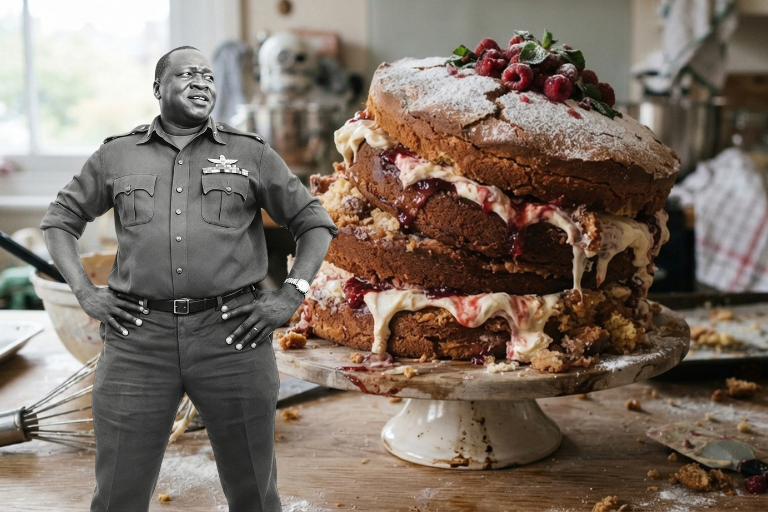
Obsessed with British royalty and elite customs, Idi Amin who served as the third president of Uganda (1971 – 1979) routinely commanded his palace staff to host elaborate, traditional British high teas featuring elaborate tiered cakes, scones, and clotted cream. During one high-profile diplomat dinner, Amin insisted on overseeing the baking of a grand Victoria sponge himself to demonstrate his “gentlemanly refined host skills.” Unfamiliar with altitude adjustments and leavening agents, the cake collapsed into a rubbery, dense mess. Furious at the embarrassment, he blamed foreign sabotage.
7. King John of England: The Toxic Peaches & Ale Scones
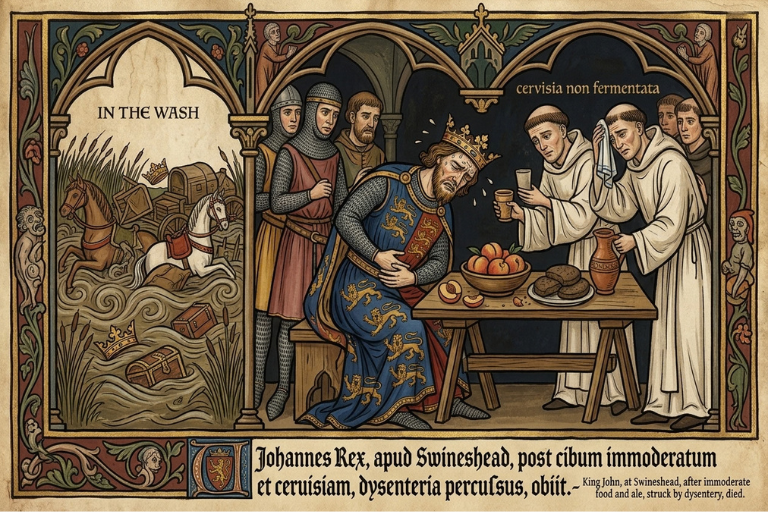
The infamous king who signed the Magna Carta (1166–1216). During his retreat from French forces across the wash in East Anglia, King John lost his crown jewels in the tide. Stressed and fleeing, he arrived at Swineshead Abbey, where he gorged himself on fresh peaches, heavy baked barley cakes, and unfermented ale. The rich, fermented combination in his stomach triggered a fatal case of dysentery or, as medieval chroniclers suspected, severe food poisoning from spoiled bakery yeast.
8. Jacques the Apprentice: The Sablé de Nançay Mishap
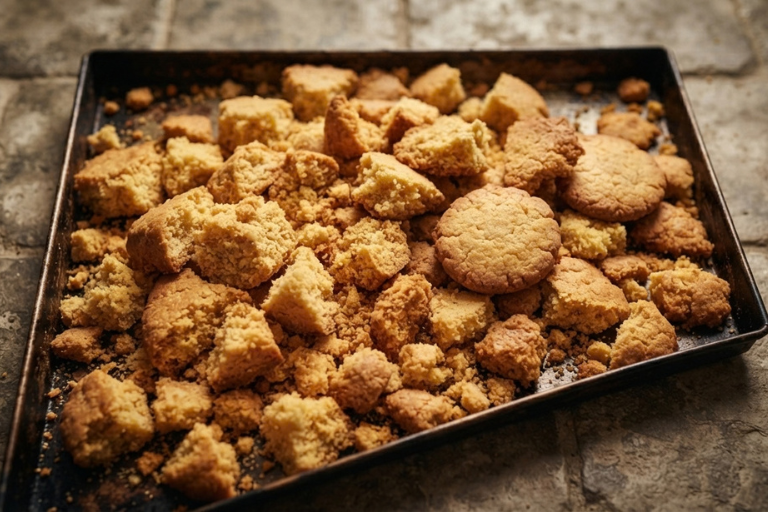
Infamously clumsy French baker’s apprentice (1950s). In a small bakery in Nançay, France, young apprentice Jacques was tasked with making a large batch of standard butter dough for the daily morning bread and pastry run. He drastically botched the dry-to-wet ratio, making the mixture far too crumbly to hold a shape. Panicked, he hid the ruined dough in the cooler overnight. The next day, he baked the chilled, broken chunks anyway. Instead of ruined bread, the mistake yielded the now-famous, melt-in-your-mouth Sablés de Nançay shortbread.
9. The Paris Pastry Apprentice: The “Ganache” Scolding
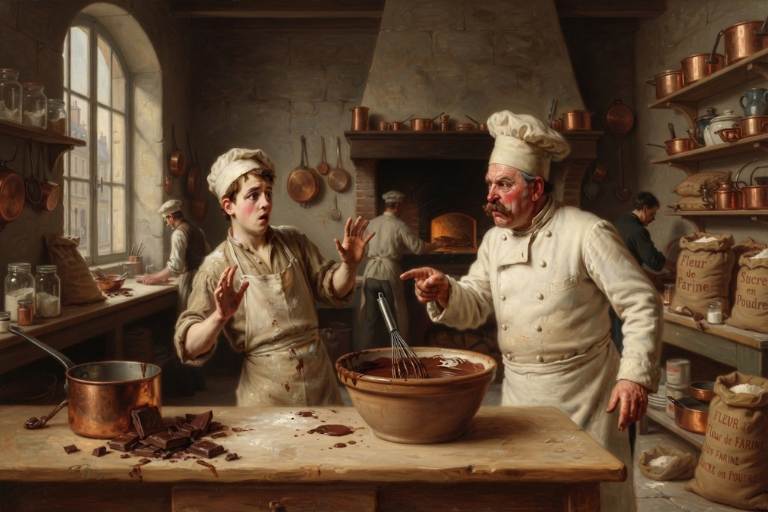
An unknown, clumsy 19th-century apprentice at Maison Siraudin. In the 1850s, a nervous French apprentice accidentally poured a pot of scalding hot cream directly into a bowl of solid chocolate scraps instead of the cake batter he was supposed to be mixing. His master baker flew into a rage, calling him a “ganache” (19th-century French slang for a complete fool or dunce). Upon stirring the ruined mess, however, they discovered a smooth, glossy chocolate glaze. The mistake was rebranded as “Ganache,” turning a furious kitchen failure into one of world’s most famous baking components.
10. Yves-René Scordia: The Kouign-Amann Ratios
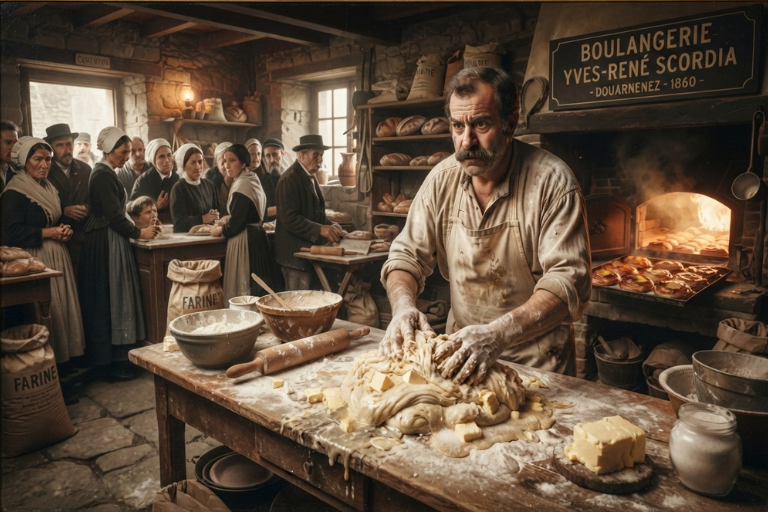
Facing an unexpected rush of morning customers, French baker Yves-René Scordia (c. 1860) realized he had almost completely run out of flour, but had a massive excess of butter and sugar. Refusing to turn customers away, he attempted to stretch his remaining bread dough by folding in massive layers of butter and sugar, breaking all standard baking ratios. The dough turned into a sticky, leaking nightmare in the oven, but baked into a gooey, caramelized crust. It created the Kouign-Amann, now world-famous as Brittany’s rich flagship pastry.
11. The St. Louis Baker: The Gooey Butter Flop
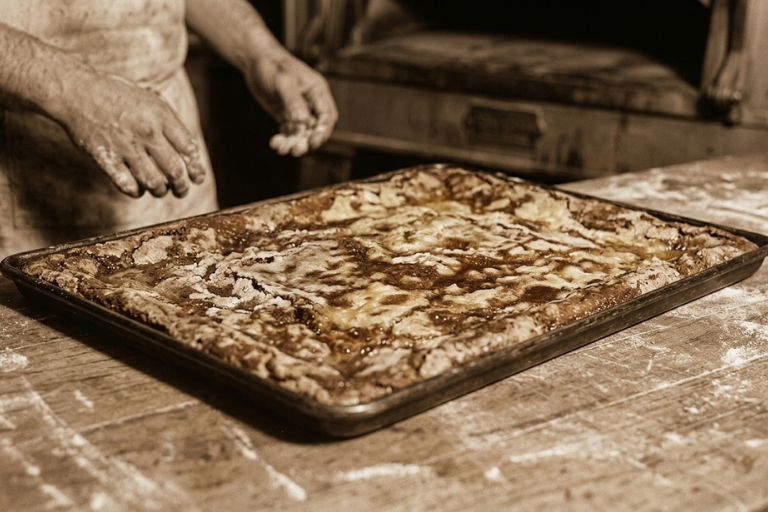
During the Great Depression, a German-American baker (1930s) in St. Louis accidentally reversed the proportion of butter and flour while mixing up a batch of traditional cake batter. Instead of rising into a fluffy sponge, the finished cake collapsed into a flat, dense, intensely sweet, custard-like sheet. Rather than throwing away precious ingredients during hard economic times, he cut it into squares and sold it as “Gooey Butter Cake”. It instantly sold out and remains a St. Louis staple.
12. The Tatin Sisters: The Upside-Down Tart
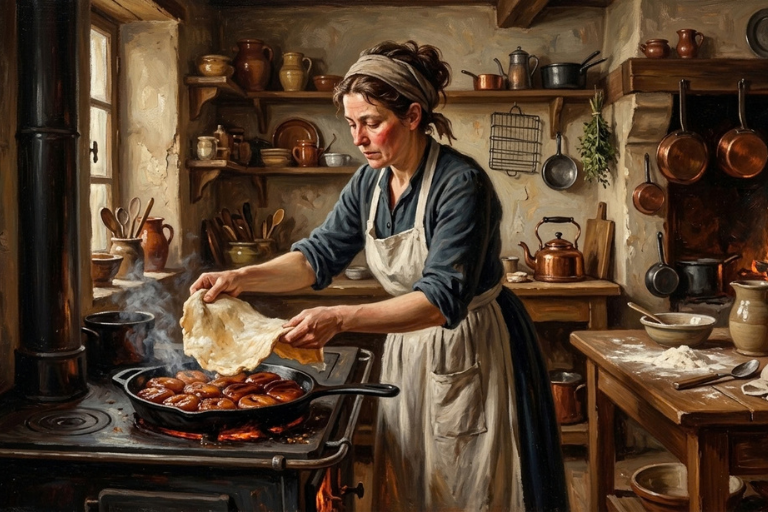
While running the Hôtel Tatin in Lamotte-Beuvron, France, an overworked hotelier in the 1880s named Stéphanie Tatin started making a traditional apple pie. Distracted by guests, she left the apples cooking in butter and sugar on the stove for far too long until they began to burn. In a desperate attempt to save the dessert, she slapped a sheet of pastry dough directly over the burning apples in the skillet and shoved the whole pan into the oven. When flipped onto a plate, the caramelized Tarte Tatin was born.
13. Pierre Desfontaines: The Macaron Shell Meltdown
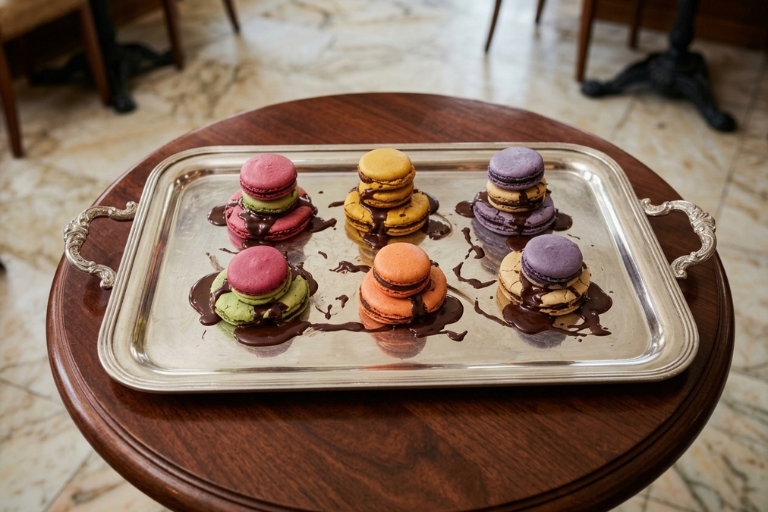
This is the story of a Infamous Parisian baker & founder of Ladurée (1930s). Early macaron shells were single, dry biscuits. Desfontaines sought to innovate by joining two macaron shells with rich chocolate ganache. During his first public unveiling at his high-end tea salon, improper resting times caused the delicate meringue caps to absorb moisture too quickly, turning the high-society treats into a sticky, cracked mess on silver serving trays. Adjusting the humidity and ganache temperature turned his failure into the modern double-decker French macaron.
14. The 1840s Pastry Assistant: The Gâteau Manqué
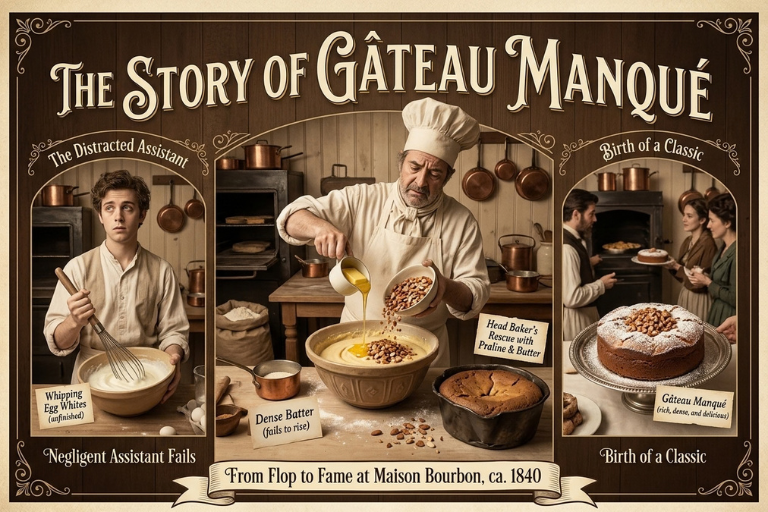
This is a story about a negligent French pastry assistant at Maison Bourbon. While tasked with whipping egg whites into stiff peaks for a delicate sponge cake, a distracted assistant stopped early, resulting in a flat batter that refused to rise in the oven. Facing termination for ruining expensive ingredients, the head baker attempted a rescue by pouring clarified butter and toasted praline into the dense batter to disguise the texture. The cake was named Gâteau Manqué (literally “Failed Cake”), and its rich, dense texture became a classic French bakery standard.



GIPHY App Key not set. Please check settings