

 Michael Cambridge
From whispered scandals to enduring mysteries, the Metropolitan Museum of Art in New York City is a treasure trove of masterpieces that tell stories far beyond their frames. Housing over 5,000 years of art history, the Met offers not only beauty and brilliance but also drama, controversy, and intrigue. These ten paintings—each uniquely compelling—represent more than artistic excellence. They’ve stirred outrage, provoked debate, and captivated viewers for generations.
Earlier versions of the descriptions of these paintings first appeared in 1001 Paintings You Must See Before You Die, edited by Stephen Farthing (2018). Writers’ names appear in parentheses.
1. Madame X (1883–84) – John Singer Sargent
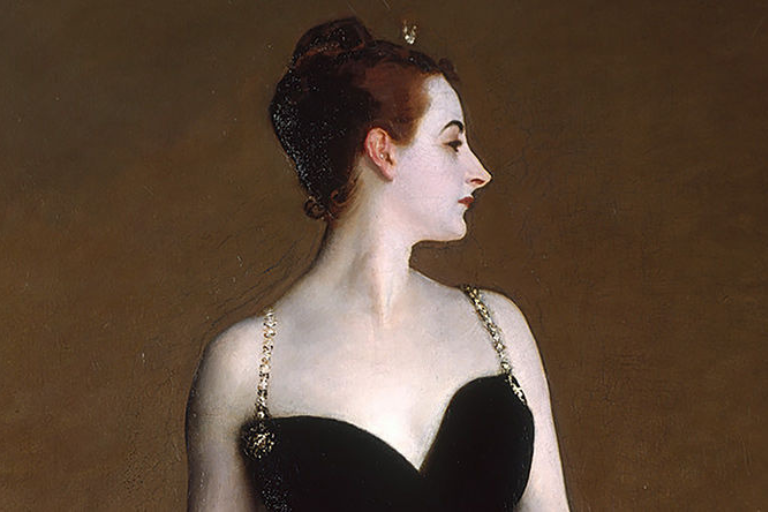
Perhaps the most scandalous portrait of the 19th century, Sargent’s Madame X turned heads—and stomachs—when it was first unveiled at the Paris Salon in 1884. The subject, Virginie Amélie Avegno Gautreau, was a New Orleans-born Parisian socialite known for her beauty and unconventional style. Sargent painted her in a black satin gown with one strap scandalously slipping from her shoulder. Though the painting is now praised for its elegance and psychological depth, Parisians were appalled. The controversy forced Sargent to flee to London, where he would later rebuild his career. Today, Madame X hangs proudly in the Met, a monument to the power of a single image to upend social norms.
2. The Death of Socrates (1787) – Jacques-Louis David
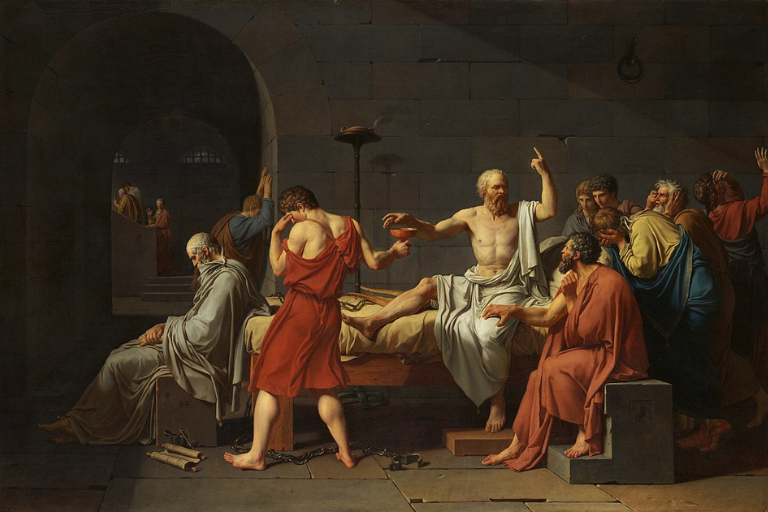
This neoclassical masterpiece captures the final moments of the philosopher Socrates, sentenced to death for corrupting the youth of Athens. Jacques-Louis David, known for his politically charged paintings during the French Revolution, emphasizes stoic heroism over despair. Socrates is shown with arm outstretched, about to drink the hemlock, surrounded by distraught disciples. The painting’s powerful message about the sacrifice for truth and ideals resonated deeply in revolutionary France—and still does today. David’s stark composition, paired with restrained color, underscores the emotional gravity of the moment.
3. The Musicians (1595) – Caravaggio
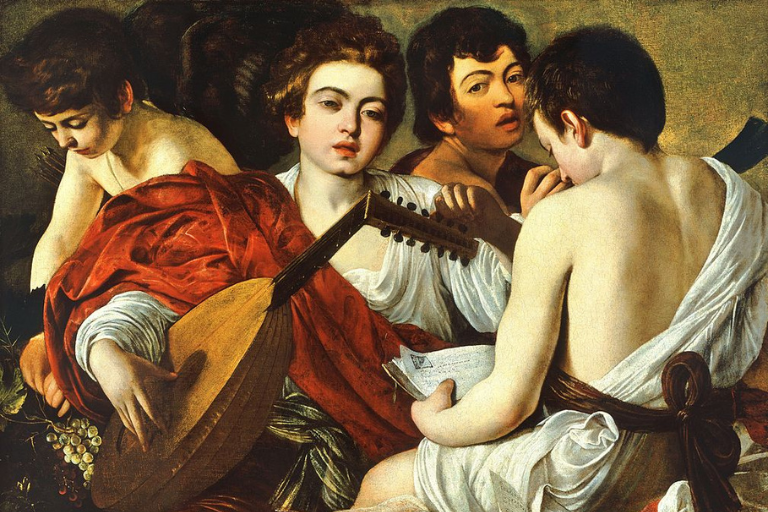
Before Caravaggio’s The Musicians, few paintings captured sensuality and psychological nuance with such audacity. Painted when the artist was in his early twenties, this early work combines music, youth, and ambiguous desire in a tightly staged composition. Three young men play and sing together while a fourth figure (perhaps Cupid) watches. The intimacy and theatrical lighting are classic Caravaggio, hinting at the artist’s later, darker themes. The painting raises questions—who are these musicians? What are their relationships? It’s a picture that asks more than it answers.
4. The Harvesters (1565) – Pieter Bruegel the Elder
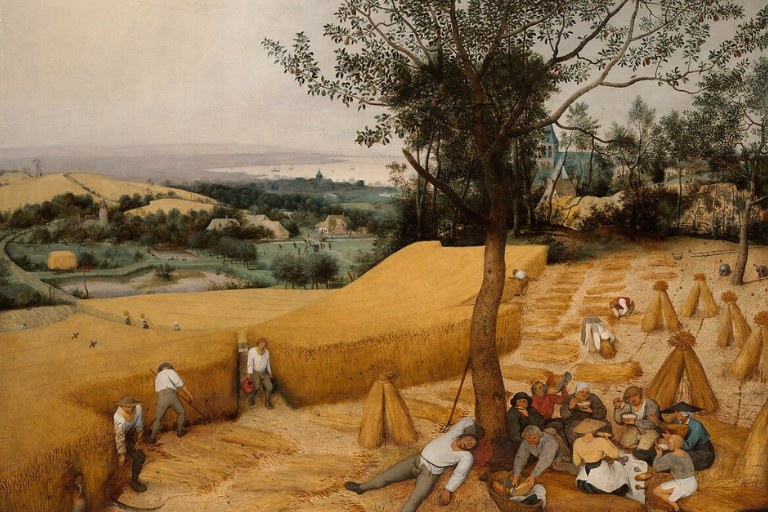
This serene yet busy scene of rural life from Bruegel’s Seasons series offers a window into 16th-century peasant culture. Unlike idealized depictions of the countryside, The Harvesters teems with unvarnished human activity—men scything wheat, women resting, children playing. Its realism was revolutionary. While painted in a time of religious conflict and upheaval, Bruegel focused instead on everyday life, suggesting the enduring rhythms of nature. The painting’s blend of earthy detail and panoramic scope makes it one of the most important depictions of agrarian life in Western art.
5. Self-Portrait with a Straw Hat (1887) – Vincent van Gogh
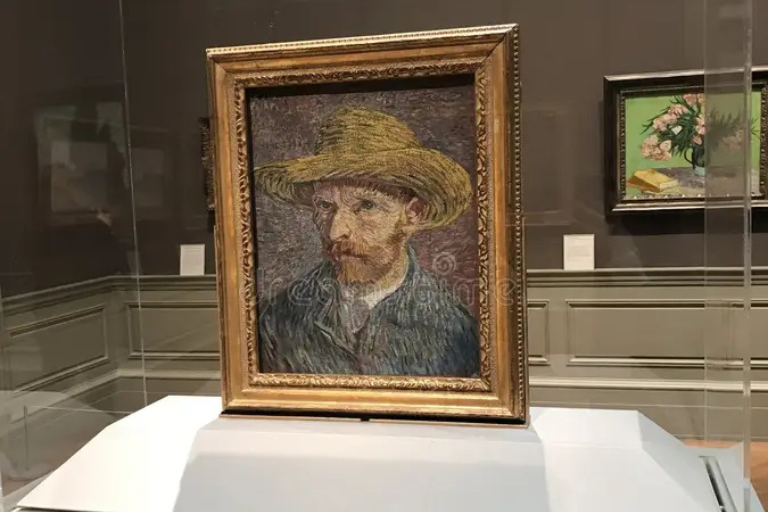
Van Gogh’s self-portraits are famous for their psychological intensity, and this version, painted in Paris, is no exception. He stares out from beneath a pale yellow straw hat, his eyes sharp and electric. It is both an assertion of identity and a vulnerable confession. Van Gogh used himself as a model out of necessity, but these paintings also became a form of self-exploration. This piece marks a pivotal moment when his palette brightened under the influence of Impressionism, setting the stage for the vivid colors of his later work.
6. The Horse Fair (1852–55) – Rosa Bonheur
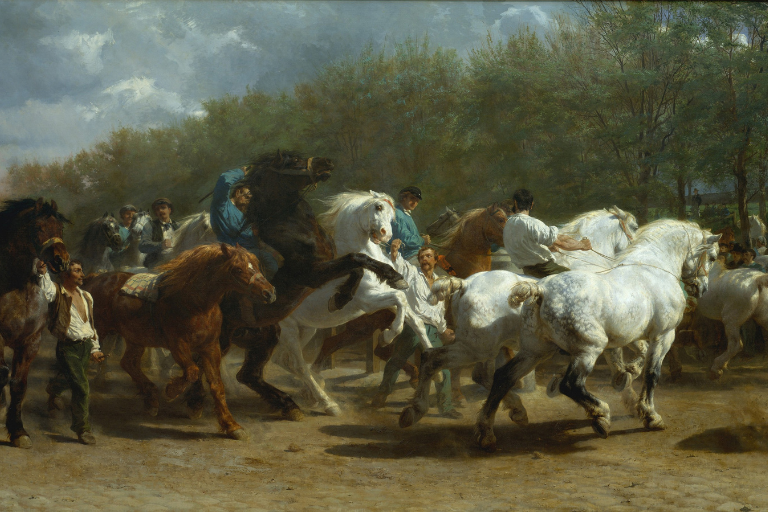
Rosa Bonheur’s The Horse Fair is a thunderous celebration of animal energy and artistic freedom. This monumental canvas—over 16 feet wide—depicts the horse market held in Paris, with muscular steeds in motion and men struggling to contain their power. Bonheur was a rare woman in the male-dominated world of 19th-century art, and she went to extraordinary lengths to paint this scene: dressing as a man (with police permission) to sketch at the market. The result is a bold, kinetic work that challenges gender norms and glorifies the strength of both horse and artist.
7. Washington Crossing the Delaware (1851) – Emanuel Leutze
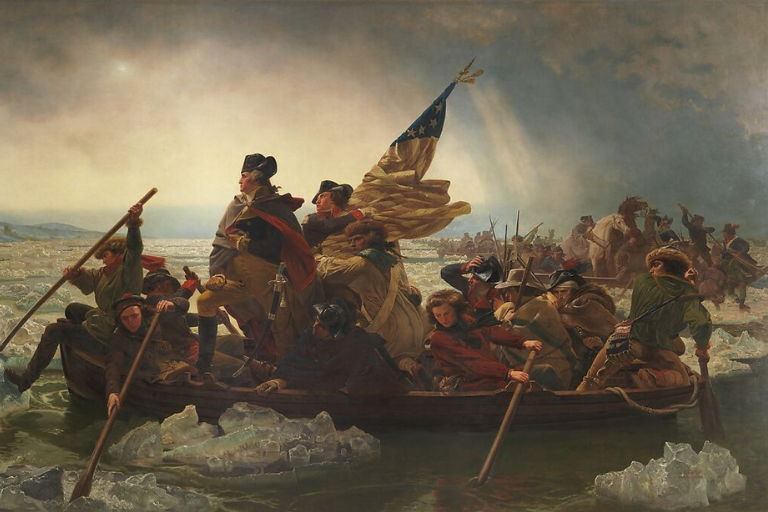
Though often mistaken for a straightforward historical painting, Leutze’s Washington Crossing the Delaware is a powerful blend of idealism and myth-making. Created by a German-American painter with strong political convictions, the painting presents General George Washington as a heroic figure braving the icy waters of the Delaware River on Christmas night, 1776. The scene is highly dramatized—almost cinematic in its intensity—and became a patriotic icon. While historians have pointed out factual inaccuracies, the painting remains a symbol of American resolve and revolution.
8. The Denial of Saint Peter (c. 1610) – Caravaggio
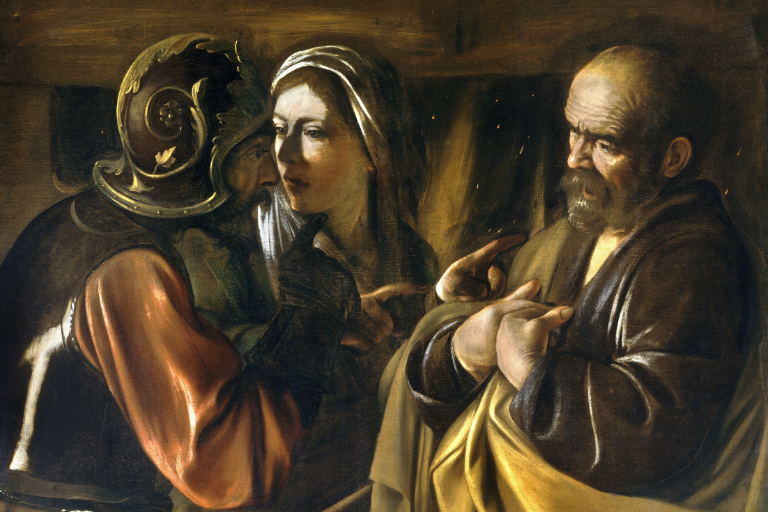
Caravaggio’s second entry on this list comes from the end of his troubled life. The Denial of Saint Peter shows the apostle’s anguished face as he denies knowing Christ, fulfilling Jesus’s prophecy. Lit by flickering torchlight, the painting captures shame, confusion, and human frailty with brutal honesty. It’s thought to be one of Caravaggio’s last works, created while he was on the run from a murder charge. The darkness of the scene echoes the darkness of his life, making this not just a biblical moment but a deeply personal reflection on guilt and redemption.
9. Aristotle with a Bust of Homer (1653) – Rembrandt
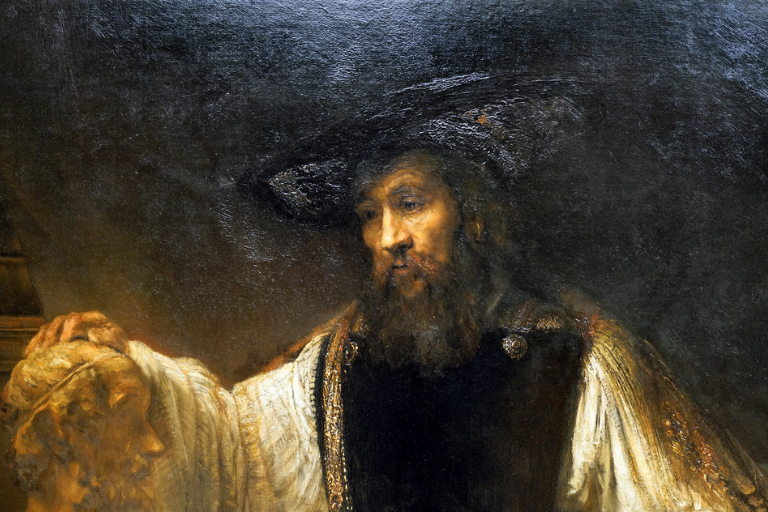
In this philosophical portrait, Rembrandt presents Aristotle, opulently dressed, placing his hand on a bust of the blind poet Homer. The painting explores the tension between material wealth and intellectual legacy—Aristotle’s gold chain, a gift from Alexander the Great, contrasts with Homer’s bare marble form. The painting is less about literal history and more about introspection. Rembrandt was struggling financially when he painted this, and it may reflect his own questioning of fame and fortune. Few works convey such depth with such restraint.
10. Young Woman with a Water Pitcher (c. 1662) – Johannes Vermeer
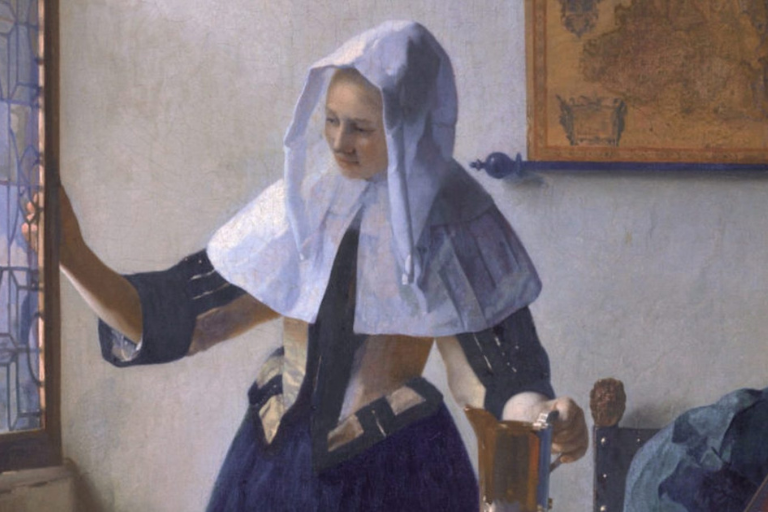
Vermeer’s interiors are serene, luminous, and hauntingly perfect. Young Woman with a Water Pitcher captures a quiet domestic moment: a woman opening a window as light streams in. Every object—the brass basin, the map on the wall, the soft folds of her dress—is rendered with meticulous care. But what makes this painting unforgettable is its silence. Vermeer’s ability to distill life into stillness gives the scene an almost spiritual quality. The woman’s thoughts remain a mystery, suspended in time.




GIPHY App Key not set. Please check settings